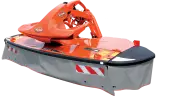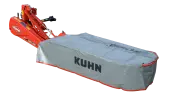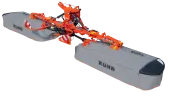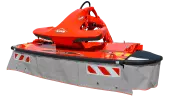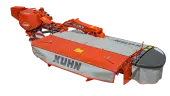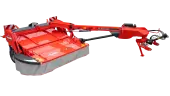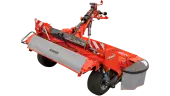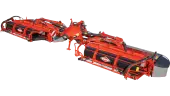
Disc Mowers
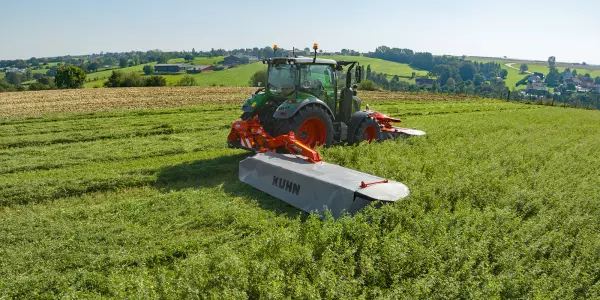
Mowing is the first and very important step in the process of making silage. KUHN is a pioneer in the field of disc mowers. Renowned globally, the GMD mower offers innovative technology to ensure quality forage and work output.
Read more

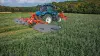
KUHN, is continuously developping innovative mowing solutions. The design of the KUHN mower range takes into account forage quality requirements, operating comfort, productivity, safety and reliability whilst reducing maintenance costs.
Quick jump to...
Mowing is the first and very important step in the process of making silage. KUHN is a pioneer in the field of disc mowers. Renowned globally, the GMD mower offers innovative technology to ensure quality forage and work output.
Read more
Mowing and conditioning are the first and very important steps in the process of making silage. KUHN uses its technology to help you achieve the maximum return on your disc mower conditioner investment. In order to harvest the full nutritional value of your forage, the level of conditioning must be adapted. With a wide choice of conditioning devices, the KUHN range of mower conditioners offers you the optimal solution to reduce drying time and maintain quality forage.
Read more
KUHN, the agricultural mowing expert, is committed to developing innovative, reliable and versatile solutions that meet the needs of every grassland operation. Covering forage harvesting and silage production across farms of every scale, from small family holdings to large professional contracting businesses.
The mower is the first machine in the fodder harvesting chain, establishing the standard for every operation that follows, tedding, raking and baling. It is used in various applications, most notably to supply high-quality animal feed and to produce energy via methanation. Knowing when and how to mow is essential to achieving an efficient result.
Mowing should be carried out at the correct stage of plant growth for the intended use. For animal feed, cutting early maximises the nutrient content. For energy production, high-yield varieties are typically planted and harvested later for greater volume.
Producing high-quality fodder starts with keeping all mower components in good condition. Consistent upkeep enables the operator to achieve precise results while preventing field losses. The following adjustments are essential to a clean cut:
Many farmers find the choice of mower daunting, given the sheer number of options. The key is to identify which type best suits the farm's specific needs; this will significantly ease the decision. Points to consider include:
The folding mode for road transport.
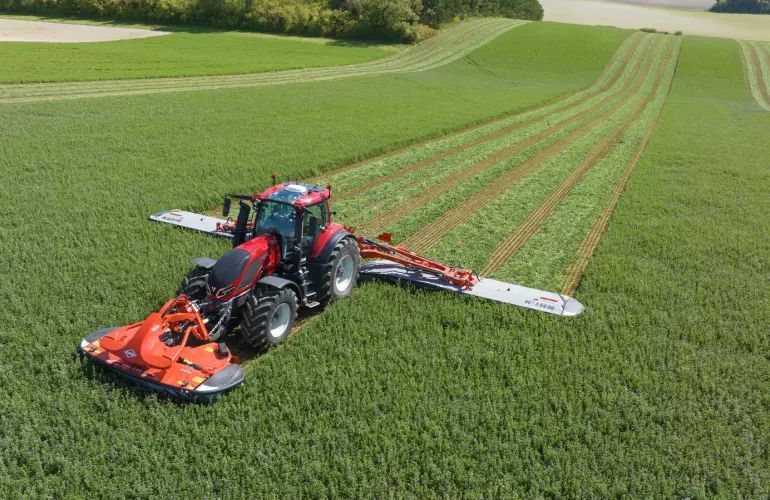
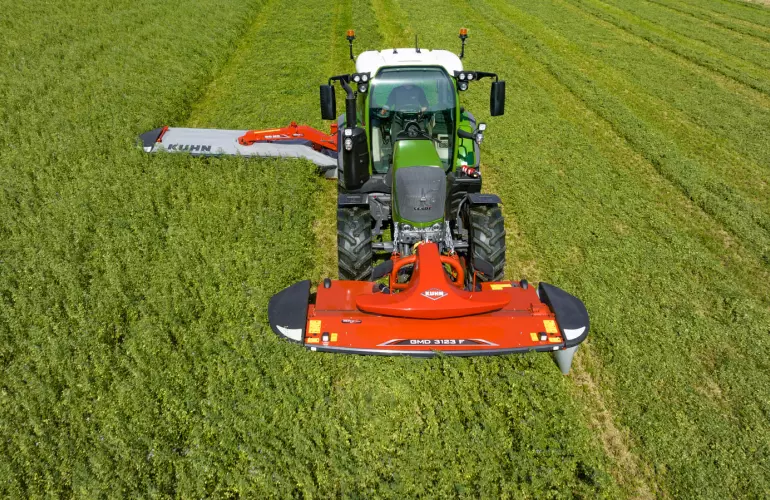
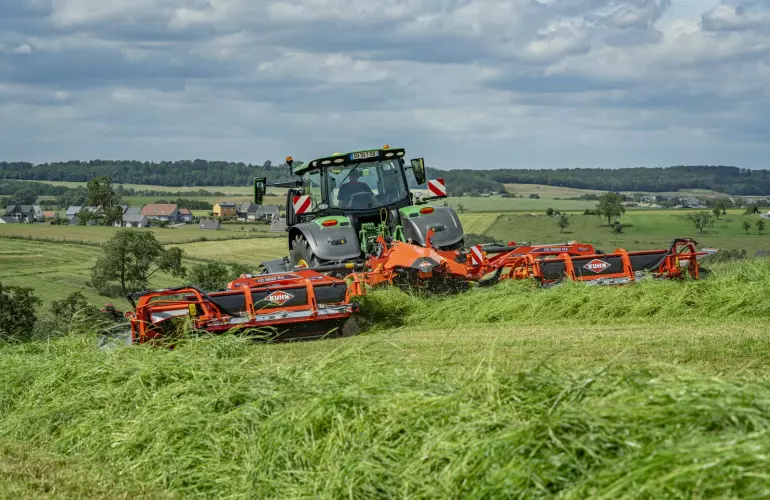
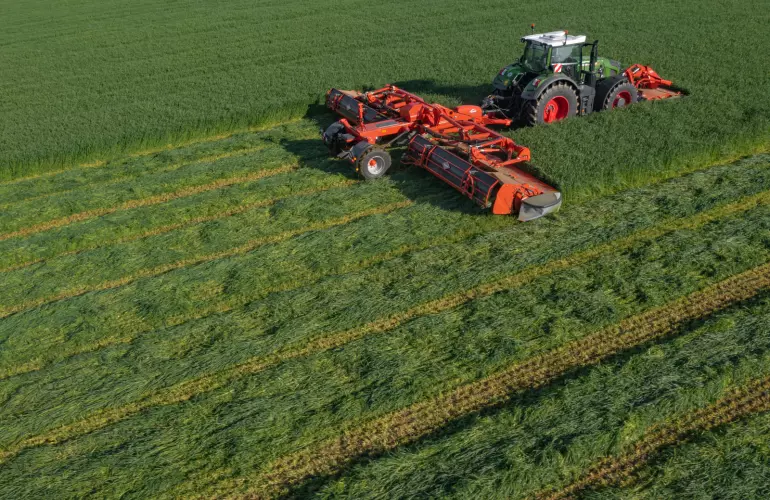
The disc mower has dominated the market for several decades, delivering fast, high-quality grass mowing across a wide working width. Available as front, rear, and triple combination configurations, mowers span from 1.60 to over 14 metres, the standard choice for the largest operations
Adding a conditioning system to a mower speeds up the drying process significantly, slashing field drying time and improving fodder quality. The two main types are:
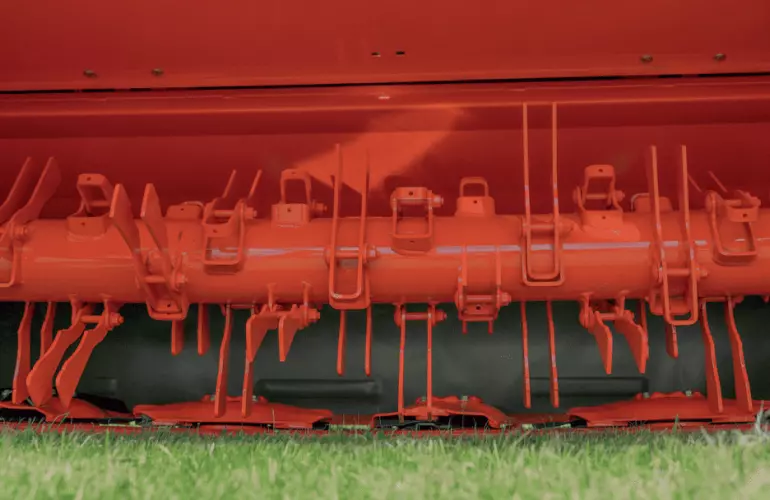
Finger conditioner systems are widely used and ideal for grass and mixed fodder. Adjustable speed and pressure allow them to adapt to all fodder types, including legumes.
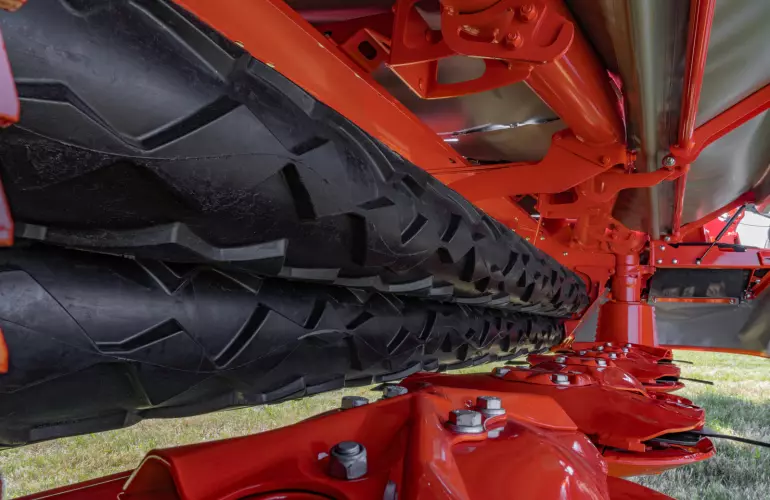
Roller conditioner systems are ideal for delicate crops such as alfalfa. Pressure applied to the stems facilitates water removal, while large-diameter rollers provide high-capacity rearward evacuation, preventing the crop from winding round.
With the full range of front, triple, mounted, and trailed mower options, every farmer working in agriculture will find a solution that fits their operation.
Farmers have two system options: mounted and trailed.
The mounted connects directly to the tractor’s 3-point hitching system, providing excellent stability and straightforward handling for both at work and on the road. With widths from 1.60 to 14.50 metres, mounted machinery meets the needs of all sizes of operation, from small holdings to professional contractors.
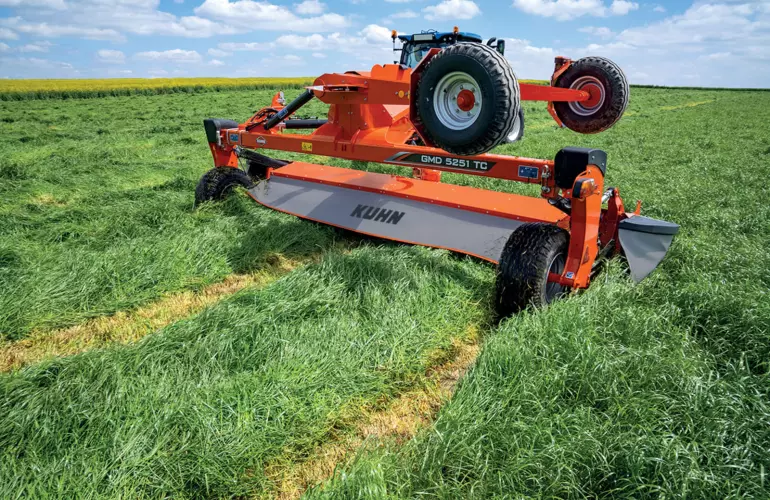
The trailed fittings come with their own chassis and transport axle, which relieves the load on the hitch. They range in width from 2.67 to 13.40 metres, making them appropriate for a wide range of tractors.
Power specifications vary considerably depending on size and configuration. For smaller machines, around 50 to 60 hp is sufficient, while the largest combination mowers can require up to 300 hp.
As an example, a GMD 5251 TC trailed mower requires a tractor of around 120 hp, while the FC 13460 RA, the largest combination mower in its class, needs approximately 300 hp when fitted with a swath-grouping conveyor.
Since the unveiling of the first disc mower in 1967, a series of patents, exclusivities, and engineering innovations have continued to advance grass mowing technology.
The LIFT-CONTROL system improves ground contour following and automatically manages ground pressure. It works alongside a breakaway system that allows the machine to pivot rearward and increase lift to pass over obstacles, with the NON-STOP safety feature returning it to its working position without manual intervention.